Tree Removal Council Approval Quick Answer Australia
Most trees in Australia require council approval for removal. If your tree is over 3-5 metres tall (varies by council), has a trunk diameter exceeding 300-600mm , is a protected species, or located in a heritage area, you'll need a Development Application (DA) . Application fees range from $100-$900+, processing takes 4-12 weeks (including a required AQF Level 5 arborist report), and penalties for illegal removal range from $5,000 to $1.1 million plus replanting orders.
Typical cost
Most trees in Australia require council approval for removal. If your tree is over 3-5 metres tall (varies by council), has a trunk diameter exceeding 300-600mm , is a protected species, or located in a heritage area, you'll need a Development Application (DA) . Application fees range from $100-$900+, processing takes 4-12 weeks (including a required AQF Level 5 arborist report), and penalties for illegal removal range from $5,000 to $1.1 million plus replanting orders.
Best next step
Use the guide below to compare options, avoid common traps and request itemised quotes from licensed local suppliers.
Quote check
Make sure each quote includes materials, labour, access requirements, exclusions, warranty and expected timeline.
Local factors
Final pricing can shift with site access, location, compliance requirements and the condition of existing infrastructure.
Important Warning
Removing protected trees without approval can result in fines from $5,000 to $1.1 million and orders to replant trees. Always check with your local council before removing any tree.
Council Approval Requirements for Tree Removal 2026 Australia
You generally need council approval to remove a tree if it:
- • Is larger than 3-5 meters tall (varies by council)
- • Has a trunk diameter over 300-600mm (varies by state)
- • Is on a protected species list
- • Is in a heritage conservation area
- • Has a Tree Preservation Order (TPO)
Tree Removal Laws by State: NSW, VIC, QLD, WA, SA 2026 Australia
New South Wales (NSW)
When You Need Approval:
- • Trees taller than 3-5 meters (council-dependent)
- • Trees with trunk diameter over 600mm at 1m height
- • Any tree in a heritage conservation area
- • Protected native species (e.g., Blue Gum, Turpentine, Ironbark)
- • Trees subject to a Tree Preservation Order
Common Exemptions:
- • Dead or dying trees (arborist report required)
- • Trees posing immediate danger
- • Noxious weeds or declared pest species
- • Trees within 3m of a house (some councils)
Victoria (VIC)
When You Need Approval:
- • Trees over 4 meters tall on residential land
- • Trees with trunk circumference over 110cm at 1m height
- • Any tree covered by a Vegetation Protection Overlay (VPO)
- • Significant trees in heritage areas
- • Trees with Aboriginal cultural significance
Common Exemptions:
- • Dead or dying trees (certified arborist report)
- • Urgent safety removals (24-hour rule)
- • Declared noxious weeds
- • Regrowth vegetation under 10 years old (some councils)
Queensland (QLD)
When You Need Approval:
- • Significant trees as defined by local council
- • Trees over 6 meters tall (Brisbane City Council)
- • Trees with trunk diameter over 400mm
- • Protected native species or mangroves
- • Trees in vegetation management areas
Common Exemptions:
- • Dead or dangerous trees (arborist certification required)
- • Category X plants (declared invasive species)
- • Trees within 2m of structures causing damage
- • Emergency removals with 24-hour notification
Western Australia (WA)
When You Need Approval:
- • Trees covered by Local Planning Policies
- • Significant trees (council register)
- • Trees in Tree Preservation Orders areas
- • Native vegetation clearing (EPA approval may be required)
Common Exemptions:
- • Dead or dangerous trees (with documentation)
- • Declared pest species
- • Trees causing structural damage to buildings
South Australia (SA)
When You Need Approval:
- • Significant trees (2m+ trunk circumference at 1m)
- • Regulated trees (3m+ trunk circumference at 1m)
- • Native vegetation under Native Vegetation Act
- • Trees in heritage areas or overlays
Common Exemptions:
- • Dead trees (arborist report within 12 months)
- • Urgent safety removals (notification required)
- • Declared pest plants
Tasmania (TAS)
When You Need Approval:
- • Trees in Local Landscape Conservation areas
- • Significant trees as listed by council
- • Trees with trunk circumference over 1.5 meters at 1.4m height
- • Native vegetation under Forest Practices Act
- • Trees in coastal or waterway protection areas
Common Exemptions:
- • Dead or dying trees (certified arborist assessment)
- • Immediate safety hazards (notification within 7 days)
- • Declared weed species
- • Trees planted within last 10 years (some councils)
Australian Capital Territory (ACT)
When You Need Approval:
- • Registered significant trees (ACT Tree Register)
- • Trees with trunk circumference over 1.5 meters at 1m height
- • Trees in designated tree management precincts
- • Protected native species under Tree Protection Act 2005
- • Trees within 12m of residential blocks (some areas)
Common Exemptions:
- • Dead trees (arborist report required within 60 days)
- • Immediate danger to life or property
- • Declared pest plants (e.g., Willows near waterways)
- • Trees causing proven structural damage (engineer's report)
- • Fruit trees and non-native ornamentals under 12m
Northern Territory (NT)
When You Need Approval:
- • Trees in Heritage Places or conservation zones
- • Significant trees identified in council planning schemes
- • Native vegetation clearing (may require clearing permit)
- • Trees affecting Aboriginal land or sacred sites
- • Mangroves and coastal vegetation
Common Exemptions:
- • Dead or hazardous trees (professional assessment required)
- • Emergency removals (notification within 48 hours)
- • Declared weed species
- • Trees on residential blocks under 2 hectares (some exceptions)
- • Fire hazard reduction near buildings (conditions apply)
Council Tree Removal Application Process: Steps, Costs & Timeline Australia
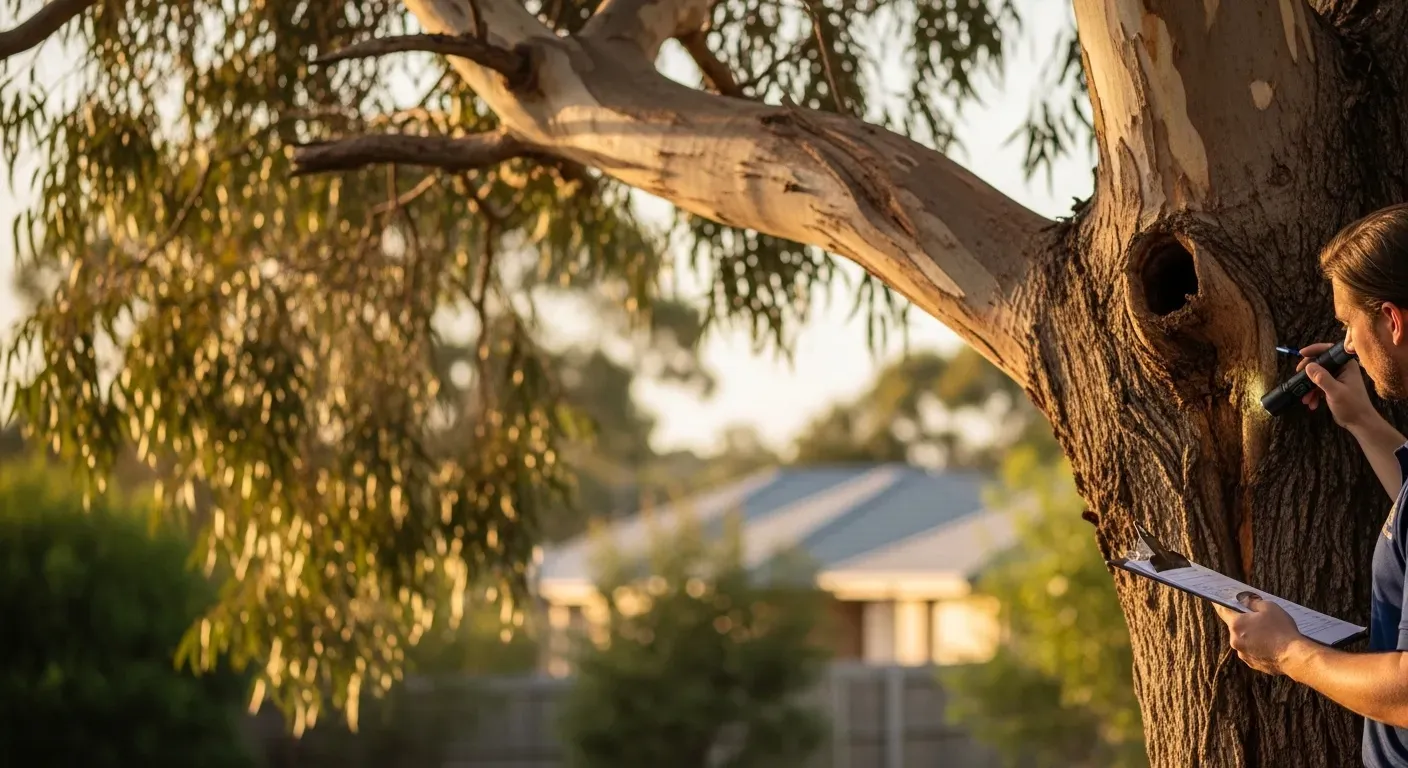
Get an Arborist Report
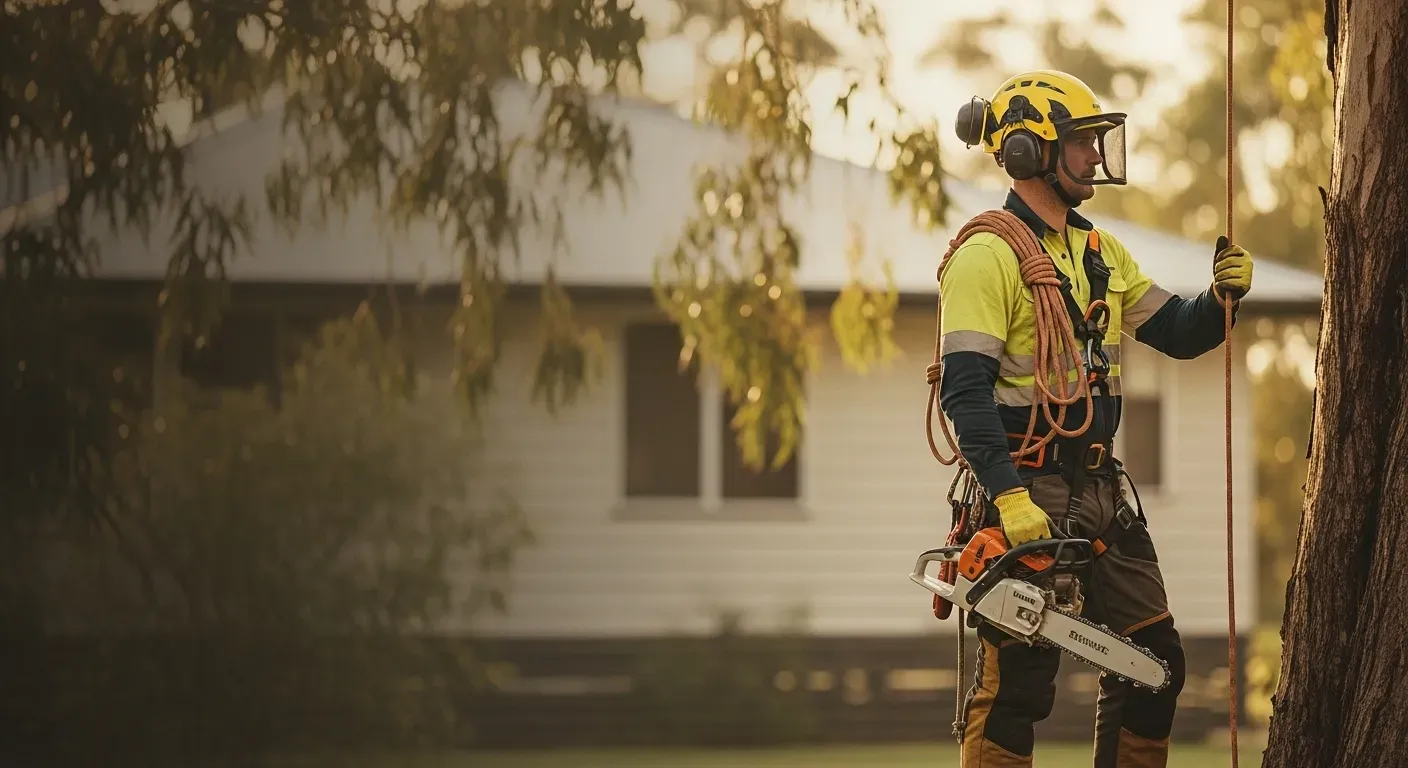
Hire a qualified arborist (AQF Level 5) to assess the tree. The report should include tree health, species, measurements, and reasons for removal. Cost: $250-$800.
Submit Development Application
Complete your council's tree removal application form. Include the arborist report, site plans, photos, and reasons for removal. Application fees range from $100-$900+ depending on council.
Public Notification (if required)
Some councils require you to notify neighbors. This may involve letterbox drops or signage on your property for 14-21 days.
Wait for Assessment
Council will assess your application. Processing time: 4-12 weeks. They may approve, approve with conditions (e.g., replanting), or refuse.
Hire Licensed Arborist
Once approved, hire a licensed, insured arborist to remove the tree safely and legally. Keep approval documents on file for 5+ years.
Commonly Approved Reasons
- ✓ Tree is dead or dying (with report)
- ✓ Immediate safety hazard
- ✓ Causing structural damage to home
- ✓ Blocking sewerage/drainage
- ✓ Invasive pest species
- ✓ Necessary for approved building work
Commonly Rejected Reasons
- ✗ "I don't like the tree"
- ✗ Blocks sunlight/views
- ✗ Drops leaves/mess
- ✗ Attracts birds
- ✗ Tree is "too big"
- ✗ Want more garden space
Strategies to Increase Tree Removal Approval Success Rate 2026 Australia
- Hire an experienced arborist - Their report quality significantly impacts approval chances
- Offer to replant - Volunteering to plant replacement trees improves approval odds
- Document everything - Photos of damage, root intrusion, or hazards strengthen your case
- Talk to neighbors - Address concerns proactively to avoid objections
- Check council records first - Search for Tree Preservation Orders or overlays before purchasing property