Fencing Cost Breakdown Quick Answer Australia
Fencing costs in Australia range from $80-$550 per metre depending on material and quality. For a typical 30-metre suburban boundary : treated pine costs $2,400-$3,600, Colorbond costs $3,600-$6,000, aluminum slat costs $5,400-$9,000, and glass costs $9,000-$16,500. Colorbond is Australia's most popular choice thanks to a 20-30 year lifespan, zero maintenance, and fire resistance - and over 20 years it works out 30-40% cheaper than timber once repainting is factored in.
Typical cost
Fencing costs in Australia range from $80-$550 per metre depending on material and quality. For a typical 30-metre suburban boundary : treated pine costs $2,400-$3,600, Colorbond costs $3,600-$6,000, aluminum slat costs $5,400-$9,000, and glass costs $9,000-$16,500. Colorbond is Australia's most popular choice thanks to a 20-30 year lifespan, zero maintenance, and fire resistance - and over 20 years it works out 30-40% cheaper than timber once repainting is factored in.
Best next step
Use the guide below to compare options, avoid common traps and request itemised quotes from licensed local suppliers.
Quote check
Make sure each quote includes materials, labour, access requirements, exclusions, warranty and expected timeline.
Local factors
Final pricing can shift with site access, location, compliance requirements and the condition of existing infrastructure.
Fence Material Comparison: Colorbond, Timber, Aluminium, Glass Costs Australia
| Fence Type | Cost per Metre | 30m Total Cost | Lifespan |
|---|---|---|---|
| Treated Pine Paling | $80-$120 | $2,400-$3,600 | 10-15 years |
| Merbau/Hardwood Timber | $130-$180 | $3,900-$5,400 | 15-25 years |
| Colorbond Steel | $120-$200 | $3,600-$6,000 | 20-30 years |
| Aluminum Slat | $180-$300 | $5,400-$9,000 | 25-40 years |
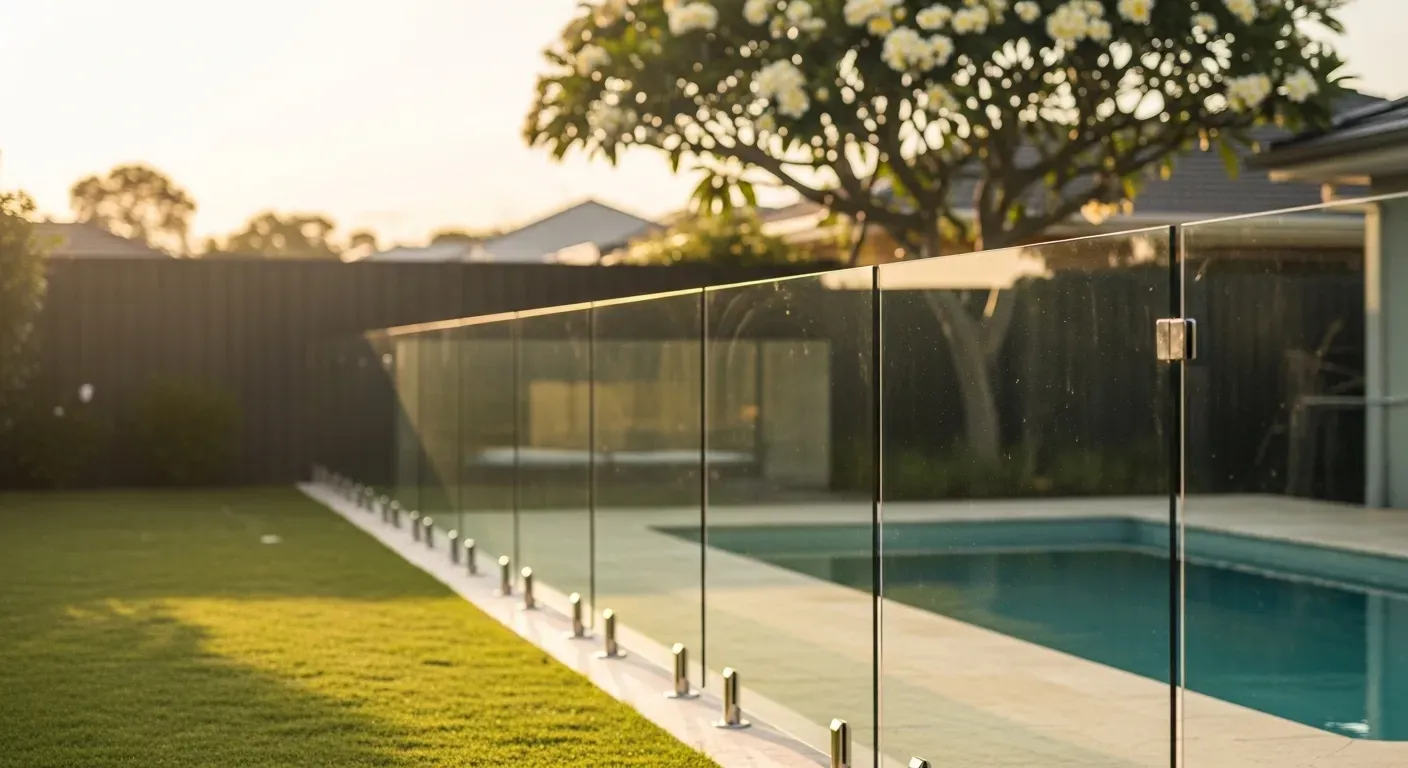
| Glass Panel | $300-$550 | $9,000-$16,500 | 20-30 years |
| PVC/Vinyl | $100-$160 | $3,000-$4,800 | 15-20 years |
Note: Prices are for standard 1.8m height fencing and include installation. Gates, corners, and difficult access add extra costs.
Colorbond Fence Costs by Height: 1.2m to 2.4m Pricing 2026 Australia
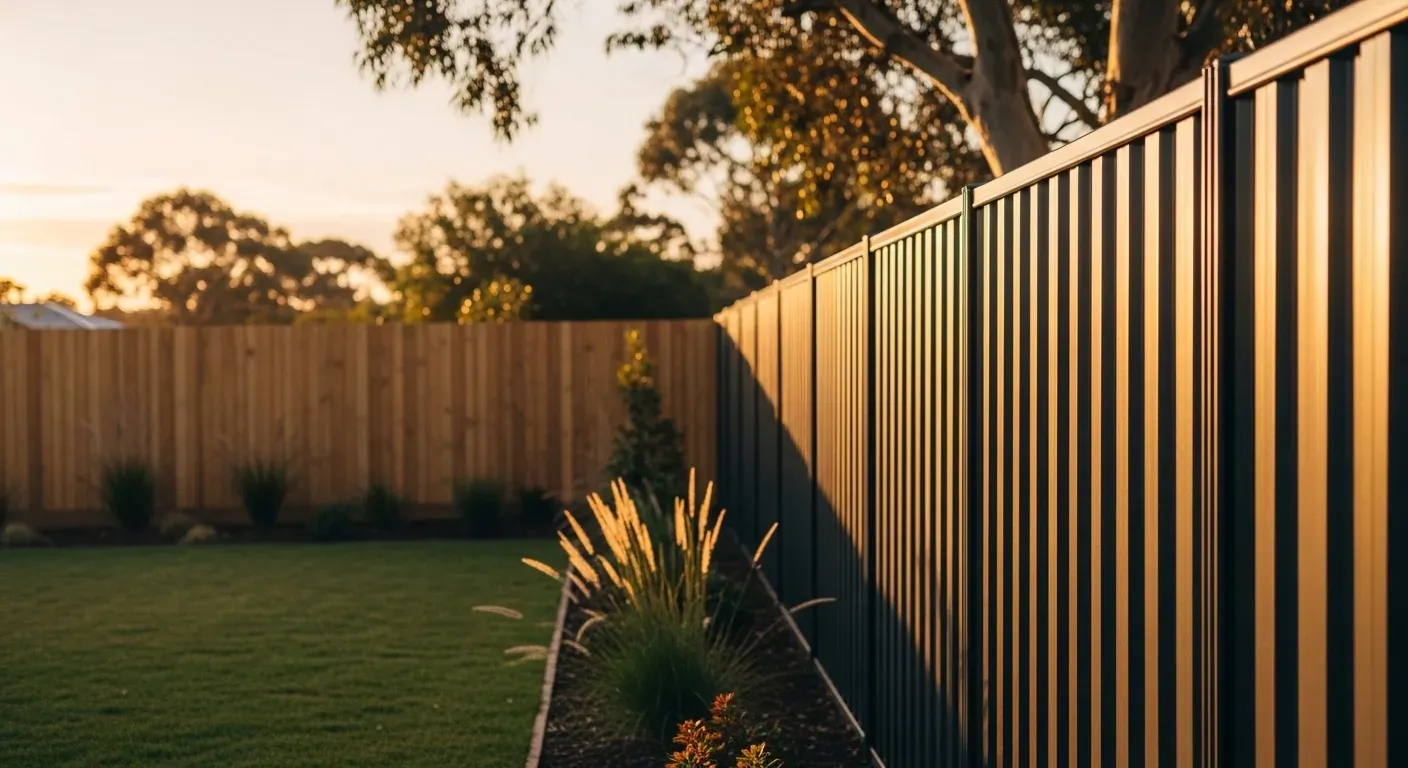
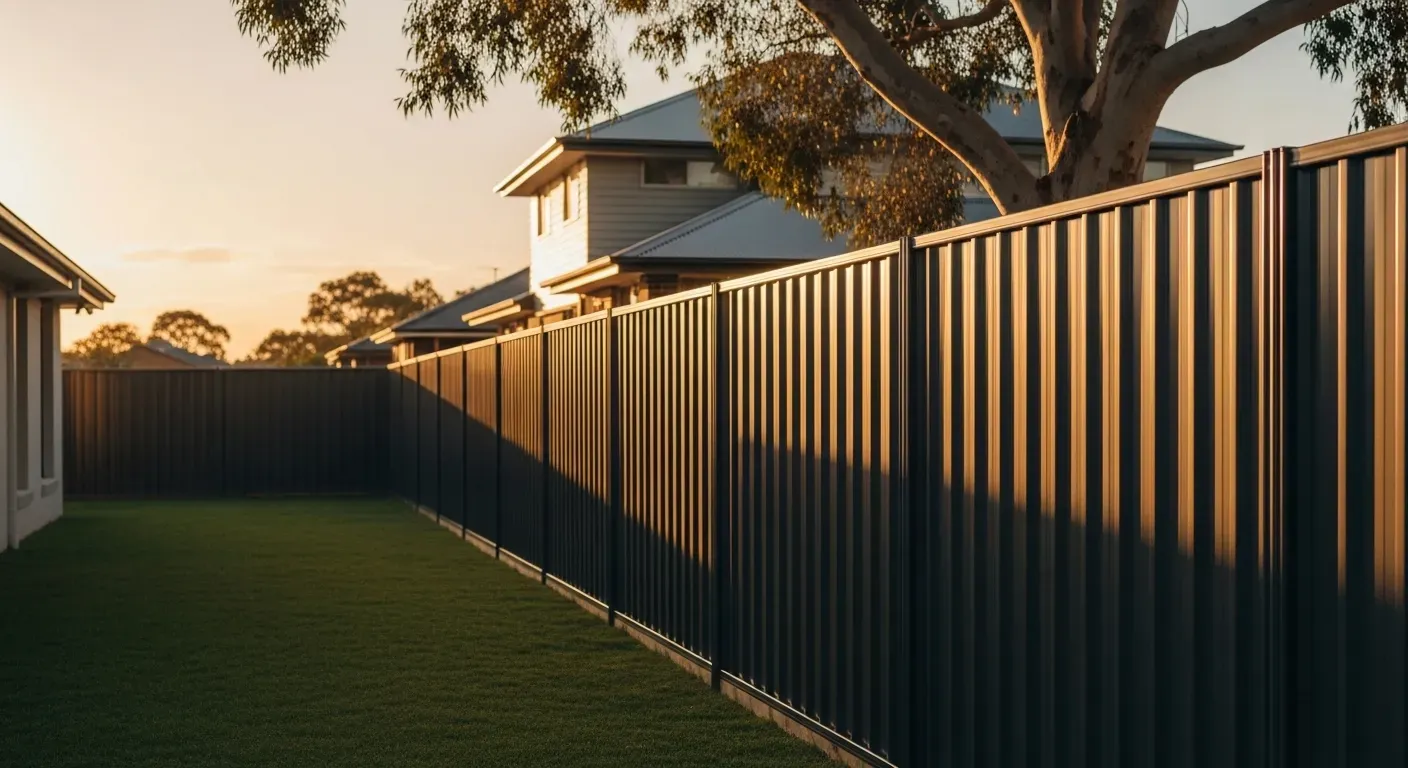
Colorbond is Australia's most popular fencing choice, accounting for over 60% of new residential fences. It combines durability, low maintenance, and excellent value for money.
Cost by Height
- 1.2m height (front fence) $100-$140/m
- 1.5m height (semi-privacy) $110-$160/m
- 1.8m height (standard boundary) $120-$180/m
- 2.1m height (extra privacy) $140-$200/m
- 2.4m height (maximum standard) $160-$220/m
What's Included
- Colorbond steel panels with choice of 20+ colors
- Steel or timber posts set in concrete (600mm deep minimum)
- Top and bottom rails, post caps, and all fixings
- Installation labour including site setup and cleanup
- Manufacturer's warranty (typically 10-15 years)
Timber Fence Costs: Treated Pine, Merbau, Hardwood Pricing 2026 Australia
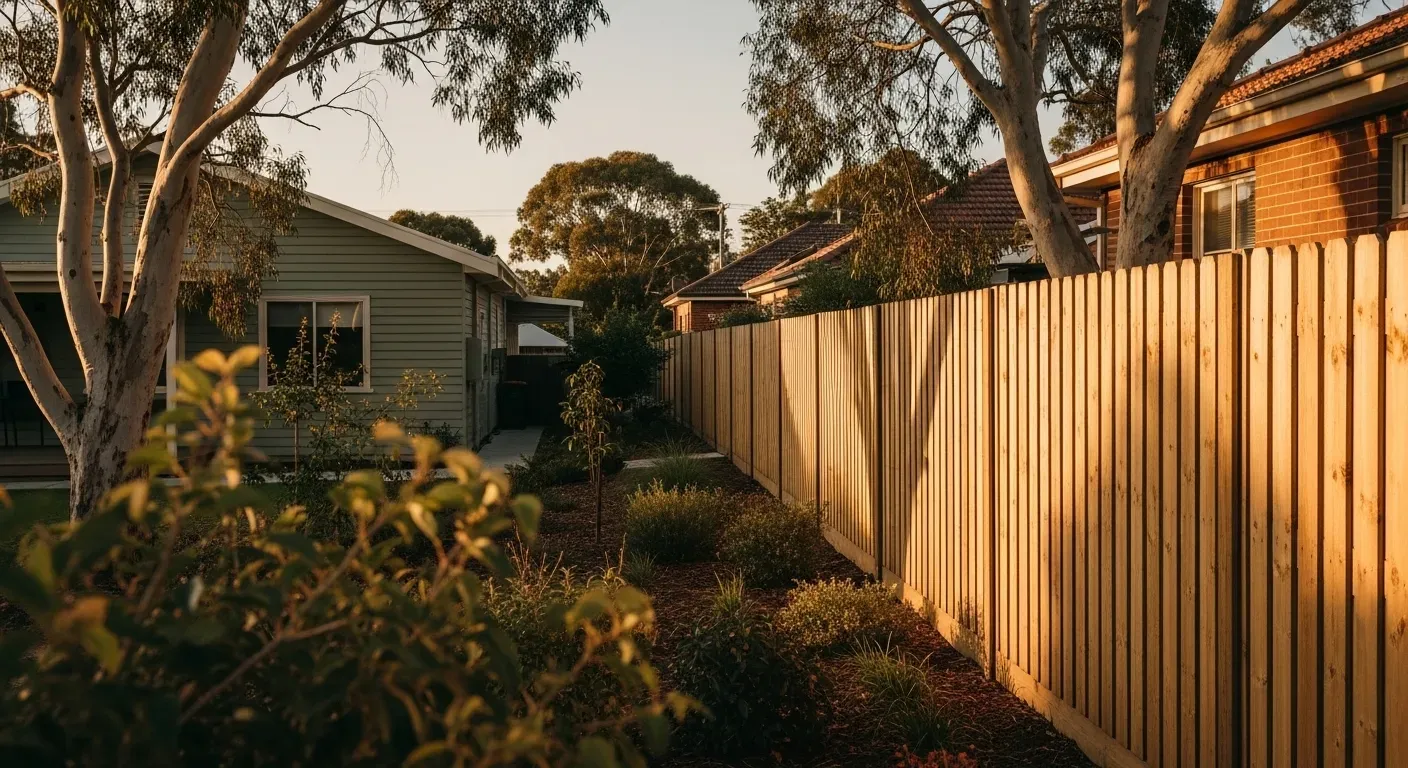
Timber fencing offers a natural, traditional aesthetic with lower upfront costs than Colorbond. However, it requires regular maintenance and has a shorter lifespan, making it more expensive over time.
Cost by Timber Type
- Treated Pine Paling (most affordable) $80-$120/m
- Treated Pine Lapped (better coverage) $100-$140/m
- Merbau Hardwood (premium) $130-$180/m
- Spotted Gum (high-end) $150-$200/m
- Cypress Pine (natural durability) $120-$160/m
Ongoing Maintenance Costs
Years 1-3: Initial Maintenance
- • Oil/stain application: $1,500-$2,500 (Year 2-3)
- • Minor repairs: $200-$500 (warped palings)
- • Total 3-year cost: $1,700-$3,000
Years 4-10: Regular Maintenance
- • Repainting/re-staining: $1,500-$3,000 every 3-5 years
- • Paling replacements: $500-$1,200 (rot/warping)
- • Post repairs: $300-$800
- • Total 10-year cost: $4,000-$7,000
Years 10-15: Major Work
- • Treated pine: Complete replacement needed ($2,400-$3,600 for 30m)
- • Hardwood: Extensive repairs or replacement ($1,500-$5,400)
- • Total 15-year cost: $8,000-$15,000+
Timber Pros & Cons
Advantages
- • Lower upfront cost ($80-$180/m vs $120-$200/m)
- • Natural, warm aesthetic
- • Traditional look suits character homes
- • Better sound absorption
- • Can be painted any color
- • Environmentally renewable resource
Disadvantages
- • High maintenance (painting every 3-5 years)
- • Shorter lifespan (10-25 years)
- • Warping and splitting over time
- • Termite susceptible (even treated pine)
- • Rot in wet/coastal climates
- • 30-40% higher lifetime cost than Colorbond
Colorbond vs Timber: 20-Year Lifecycle Cost Comparison Australia
While timber has lower upfront costs, Colorbond is significantly cheaper over the fence's lifetime. This comparison shows total ownership costs for a standard 30m boundary fence over 20 years:
Colorbond Fencing
Best ValueYear 0 - Initial Installation
$4,800
30m @ $160/m average
Years 1-10 - Maintenance
$200
Occasional hosing, zero painting
Years 11-20 - Maintenance
$300
Minor post/panel repairs if needed
Total 20-Year Cost
$5,300
Fence still in excellent condition at year 20
Treated Pine Timber
High Lifetime CostYear 0 - Initial Installation
$3,000
30m @ $100/m average
Years 1-10 - Maintenance
$4,500
2× painting ($2,000 ea) + repairs ($500)
Years 11-15 - Major Work
$3,200
Complete fence replacement needed
Years 16-20 - Second Cycle
$2,000
1× painting of replacement fence
Total 20-Year Cost
$12,700
2nd fence now halfway through lifespan
Cost Comparison Over Time
Total Savings
Colorbond saves $7,400 over 20 years compared to treated pine timber ($12,700 - $5,300 = $7,400 savings). That's 58% cheaper lifetime cost despite 60% higher upfront cost ($4,800 vs $3,000).
Hardwood Timber Note
- • Merbau/hardwood timber lasts 15-25 years (vs 10-15 for treated pine)
- • 20-year cost: ~$9,000-$10,500 (initial $5,100 + 1× painting $2,500 + repairs $1,500)
- • Still 70-100% more expensive than Colorbond lifetime costs
- • Better than treated pine but not economical vs Colorbond
- • Choose for aesthetics in character homes, not cost savings
Additional Fencing Costs: Removal, Gates, Slopes, Permits 2026 Australia
Gates
- Single pedestrian gate $400-$800
- Double driveway gate $1,200-$2,500
- Automatic gate opener $800-$1,800
Site Preparation
- Old fence removal $25-$65/m
- Sloping ground levelling $800-$2,500
- Tree/stump removal $300-$1,500
Special Requirements
- Retaining wall integration $150-$300/m
- Difficult access premium +20-30%
- Corner angles/steps $150-$400 each
Permits & Compliance
- Council permit (if required) $150-$600
- Survey/boundary check $400-$800
- Engineering certification $500-$1,200
Fencing Costs by Location: Sydney, Melbourne, Brisbane, Perth, Adelaide 2026
Fencing costs vary significantly across Australia due to labour rates, material transport, and local competition. Here's how the same 30m Colorbond fence (1.8m height) compares nationally:
Sydney, NSW
Highest costs · Premium labour rates · High insurance · Strict regulations
$5,400-$7,200
+25-35% above national avg
Melbourne, VIC
Above average · High labour costs · Competitive market
$4,800-$6,600
+20-30% above national avg
Brisbane, QLD
Slightly above average · Growing demand · Storm damage common
$4,320-$5,880
+15-20% above national avg
Perth, WA
National average · Isolated market · Higher material freight
$4,200-$5,400
+5-10% above national avg
Adelaide, SA
Below average · Lower labour costs · Smaller market
$3,600-$4,800
National average pricing
Regional Areas
Most affordable · Lower overheads · May have longer wait times · Limited contractor choice
$2,880-$4,200
15-25% below capital cities
Location Cost Factors
- • Labour rates: Sydney tradies charge $80-$120/hr vs $50-$80/hr in regional areas
- • Insurance costs: Urban contractors pay 30-50% more for public liability insurance
- • Material transport: Perth/regional areas pay $200-$500 extra freight for steel products
- • Competition: More contractors in capital cities create price competition but also maintain higher base rates
- • Council fees: Sydney/Melbourne councils charge higher permit fees ($300-$600 vs $150-$350)
- • Market demand: High demand in growing areas (Brisbane, Gold Coast) drives prices up 10-20%
Real Fencing Project Examples: Case Studies Australia
Here are actual fencing projects from Australian homeowners, showing complete costs including all materials, labour, and additional expenses:
Budget Suburban Replacement
Western Sydney, NSW · October 2024
Project Details:
- • Fence type: Colorbond steel, Woodland Grey, 1.8m height
- • Length: 35 metres (back and one side boundary)
- • Terrain: Flat, good access, shared with neighbor
- • Timeline: 2 days installation
Cost Breakdown:
- Colorbond fencing (35m @ $155/m)$5,425
- Single pedestrian gate$650
- Old timber fence removal (35m @ $35/m)$1,225
- 2 corner angles$550
- Total Cost:$7,850
- Neighbor paid 50%:$3,925 per household
Premium Character Home
Inner Melbourne, VIC · December 2024
Project Details:
- • Fence type: Spotted Gum hardwood timber, oiled finish, 1.8m height
- • Length: 42 metres (full perimeter)
- • Terrain: Slight slope, heritage area, narrow side access
- • Timeline: 4 days installation
Cost Breakdown:
- Spotted Gum timber (42m @ $170/m)$7,140
- Double pedestrian gate (custom)$1,800
- Heritage area council permit$480
- Narrow access premium (+15%)$980
- Professional oil finish$1,000
- Total Cost:$11,400
- Note: Homeowner chose premium timber for heritage character
Budget Treated Pine
Regional Queensland · August 2024
Project Details:
- • Fence type: Treated pine paling, 1.8m height
- • Length: 28 metres (back boundary only)
- • Terrain: Flat, excellent access, rental property
- • Timeline: 1.5 days installation
Cost Breakdown:
- Treated pine paling (28m @ $95/m)$2,660
- Basic pedestrian gate$420
- Old fence removal (DIY, debris only)$120
- Total Cost:$3,200
- Note: Will need painting in 2-3 years ($1,500-$2,000)
Modern Aluminum Slat
Perth, WA · November 2024
Project Details:
- • Fence type: Powder-coated aluminum slats, Monument grey, 2.1m height
- • Length: 38 metres (front and side boundaries)
- • Terrain: Coastal location, wind-rated design
- • Timeline: 3 days installation
Cost Breakdown:
- Aluminum slat fencing (38m @ $280/m)$10,640
- Automated double driveway gate$3,200
- Wind-rated engineering (+10%)$380
- Perth freight premium$380
- Total Cost:$14,600
- Note: Wind-rated for 120km/h+ coastal gusts, 30+ year lifespan
Sloping Block Challenge
Adelaide Hills, SA · September 2024
Project Details:
- • Fence type: Colorbond steel with retaining integration, 1.8m height
- • Length: 32 metres (side and back boundaries)
- • Terrain: 1.5m slope, stepping required, difficult access
- • Timeline: 4 days installation
Cost Breakdown:
- Colorbond fencing (32m @ $145/m)$4,640
- 4 stepped sections @ $180 each$720
- Retaining wall integration (8m @ $220/m)$1,760
- Difficult access/sloping premium (+25%)$1,530
- Single gate + concrete pad$800
- Engineering certification$400
- Total Cost:$9,850
- Note: Sloping terrain adds 35-40% to standard flat-ground costs
Key Takeaways from Real Projects
- • Material choice is biggest cost factor: Treated pine ($80-120/m), Colorbond ($120-200/m), Aluminum ($180-300/m)
- • Location adds 15-35%: Same fence costs $3,600 in regional areas vs $5,400 in Sydney
- • Terrain complexity matters: Sloping blocks add 25-40% for stepping and engineering
- • Gate quality varies widely: Basic gates $400-800, automated gates $1,200-3,200
- • Hidden costs add up: Removal ($750-2,000), permits ($150-600), difficult access (+15-30%)
- • Neighbor cost-sharing saves 50%: $7,850 project becomes $3,925 per household for shared boundary
How to Save Money on Fencing: 6 Tips to Reduce Costs Australia
Do This
- • Get 3-5 quotes and compare materials/warranties
- • Choose Colorbond over timber for lower lifetime costs
- • Remove old fence yourself to save $750-$2,000
- • Schedule during off-peak season (March-July)
- • Split costs 50/50 with neighbor for boundary fences
Avoid This
- • Choosing cheapest quote without checking credentials
- • Skipping neighbor consultation (leads to disputes)
- • DIY unless experienced (poor installation fails early)
- • Installing fence over property boundary line
- • Choosing treated pine for coastal or wet climates