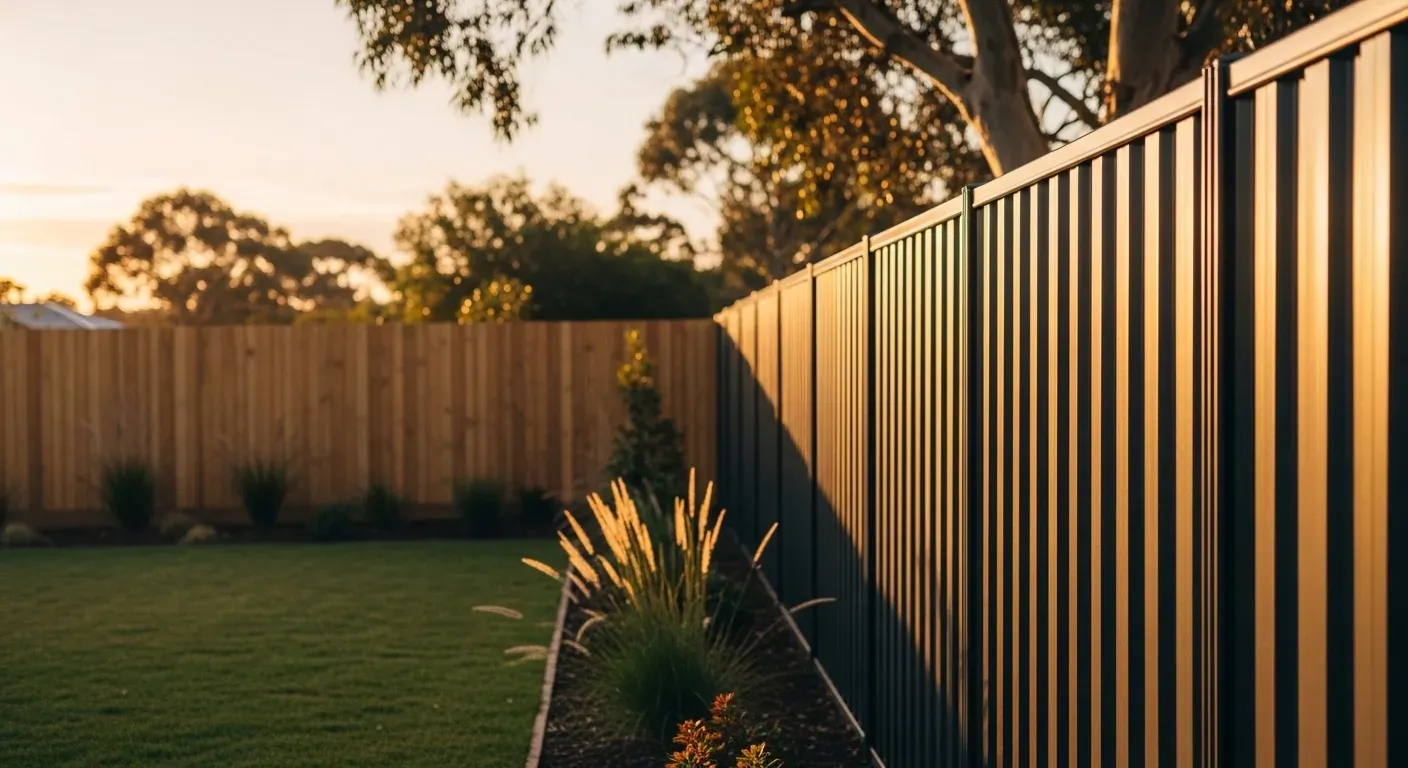
Colorbond vs Timber Fencing Initial Cost Comparison Australia 2026: Colorbond steel fencing costs $75-$120 per metre fully installed for standard 1.8m height boundary fence, price includes posts rails sheets labour and GST, material cost approximately $40-$65 per metre with labour $35-$55 per metre. Timber fencing costs vary significantly by timber type: treated pine cheapest option $60-$90 per metre installed, hardwood mid-range $90-$130 per metre installed (spotted gum, ironbark), merbau premium $120-$150 per metre installed. For standard 30m boundary fence: Colorbond total $2,250-$3,600 installed, treated pine $1,800-$2,700, hardwood $2,700-$3,900, merbau $3,600-$4,500. Colorbond approximately 20-30% more expensive than treated pine initially but similar to hardwood timber pricing.
20-Year Lifecycle Cost Analysis Colorbond vs Timber Complete Breakdown: Colorbond 30m fence 20-year total cost $3,200-$4,500: initial installation $2,500-$3,600, maintenance over 20 years $100-$300 (occasional hosing, minor touch-ups if damaged), repairs $200-$600 (storm damage panel replacement typically covered by insurance), no replacement required lifespan exceeds 25-40 years, total cost per metre per year $5.33-$7.50. Treated pine 30m fence 20-year total cost $9,300-$14,500: initial installation $1,800-$2,700, maintenance staining/painting 7-8 times over 20 years at $450-$750 each totalling $3,150-$6,000, repairs for rot warping termite damage $500-$1,500, replacement at year 12-15 when fence reaches end of lifespan $2,400-$3,600, possible second replacement at year 25+ if analysis extended, total cost per metre per year $15.50-$24.17. Hardwood timber 30m fence 20-year total cost $6,000-$10,500: initial installation $2,700-$3,900, maintenance oiling 7-8 times over 20 years at $300-$600 each totalling $2,100-$4,800, repairs for weathering damage $300-$800, no replacement required if well maintained 25-30 year lifespan, total cost per metre per year $10-$17.50. Cost comparison conclusion: Colorbond costs 50-70% less than treated pine over 20 years despite higher initial cost, Colorbond costs 30-50% less than hardwood timber over 20 years, only scenario where timber cheaper is if selling property within 3-5 years and not considering buyer's future costs.
Cost Factors and Variables Affecting Price Comparison: Height affects both materials similarly with 15-25% cost increase per 300mm height increase, 1.5m Colorbond $65-$95/m versus 1.5m timber $50-$80/m, 2.1m Colorbond $95-$140/m versus 2.1m timber $85-$130/m. Location significantly impacts pricing: Sydney highest Colorbond $95-$130/m timber $75-$120/m, Melbourne Colorbond $85-$115/m timber $65-$110/m, Brisbane Colorbond $80-$110/m timber $60-$100/m, Perth Colorbond $75-$105/m timber $55-$95/m, Adelaide lowest Colorbond $70-$95/m timber $50-$85/m. Site conditions affect both materials: sloping ground adds $15-$30/m for stepped panels, old fence removal adds $10-$20/m, difficult access adds $5-$15/m, rock or hard digging adds $20-$50 per post. Gates additional cost: Colorbond pedestrian gate $350-$600, timber pedestrian gate $250-$450, Colorbond double gate $900-$1,800, timber double gate $600-$1,200.
Colorbond Steel Fencing Durability and Lifespan Detailed: Colorbond manufactured by BlueScope Steel Australia using Zincalume steel base with baked-on polyester paint finish, designed specifically for harsh Australian conditions. Lifespan 25-40+ years in typical suburban environments, coastal areas within 1km of ocean may experience accelerated corrosion reducing lifespan to 15-25 years, inland and protected areas can exceed 40 years. Weather resistance: withstands UV exposure without fading or chalking, handles temperature extremes from frost to 40°C+ without warping or distortion, rain and humidity cause no deterioration, hail may cause minor denting but no structural damage. Pest resistance: completely termite proof steel unaffected by termite attack, no pest treatment or inspection required, significant advantage in termite-prone areas of Australia particularly Queensland and northern NSW. Fire resistance: BAL-29 rated suitable for bushfire prone areas, non-combustible will not ignite or contribute to fire spread, may warp in extreme heat but provides fire barrier, required or recommended in many bushfire overlay zones. Structural integrity: maintains strength and rigidity throughout lifespan, no warping twisting or sagging, posts remain straight and panels stay aligned, minor denting from impact does not affect structural performance. Warranty: BlueScope provides 10-year warranty on Colorbond material against perforation from corrosion, warranty conditions require proper installation and maintenance, coastal areas may have reduced warranty coverage check specific terms.
Timber Fencing Durability and Lifespan by Timber Type: Treated pine durability lowest of common timber fence options, lifespan 15-20 years with regular maintenance, H4 treatment provides in-ground durability but above-ground sections still susceptible to weathering, prone to warping twisting and splitting particularly in climates with significant temperature variation, knots can fall out creating holes, paint or stain adhesion can be poor on pine requiring more frequent recoating. Hardwood timber durability significantly better than treated pine, lifespan 25-30 years with regular maintenance, spotted gum ironbark blackbutt naturally durable and dense, more stable with less warping and twisting than pine, better paint and stain adhesion, higher density provides better structural performance and longevity. Merbau (kwila) durability excellent imported hardwood, lifespan 30+ years with regular maintenance, naturally high durability and termite resistance, rich reddish-brown colour highly valued, requires regular oiling to maintain colour or will weather to silver-grey, may bleed tannins initially staining adjacent surfaces. Weather exposure impacts all timber: rain and humidity cause swelling and eventual rot particularly at end grain and joints, UV exposure causes greying and surface degradation, temperature cycling causes expansion contraction leading to cracking and splitting, north and west facing fences deteriorate faster than south and east facing due to sun exposure. Pest vulnerability: all timber except naturally durable hardwoods susceptible to termite attack, treated pine treatment provides some protection but not complete, termite barrier systems may be required in high-risk areas adding $500-$900+ to installation, annual termite inspections recommended $200-$400 adding to total cost of ownership.
Maintenance Requirements Comparison Detailed: Colorbond maintenance minimal and simple: annual inspection for damage dents or scratches, occasional hosing to remove dirt and debris, touch-up paint available for minor scratches $15-$30 per can, panel replacement if damaged typically $150-$300 per panel including labour, no scheduled maintenance program required, total maintenance cost over 20 years $100-$500 for typical fence. Timber maintenance essential for longevity: staining or painting required every 2-3 years to prevent weathering, cost $15-$25 per metre for professional application or $5-$10 per metre DIY plus your time, preparation includes cleaning sanding filling cracks, timber preservative application recommended in termite areas, replacement of damaged palings as needed $20-$50 per paling, loose nails and screws require regular tightening, total maintenance cost over 20 years $3,000-$8,000 for treated pine $2,000-$5,000 for hardwood. Maintenance time commitment: Colorbond 1-2 hours per year for inspection and hosing, timber 1-2 full days every 2-3 years for staining/painting plus ongoing repairs, timber maintenance often deferred by homeowners leading to accelerated deterioration and shorter lifespan than potential.
Choose Colorbond Fencing When These Conditions Apply: Long-term ownership planning to stay in property 10+ years Colorbond provides best value over time with lower total cost of ownership despite higher initial investment. Low maintenance preference want set-and-forget solution without ongoing painting staining or treatment, ideal for busy households, rental properties, or those who dislike maintenance tasks. Coastal location properties within 5km of ocean benefit from Colorbond's corrosion resistance, timber deteriorates rapidly in salt air environments, Colorbond maintains appearance and structural integrity. Bushfire prone areas Colorbond BAL-29 rated required or strongly recommended in bushfire overlay zones, non-combustible material provides fire barrier, may be required by council or insurance company. Termite prone areas Queensland northern NSW and parts of other states have high termite pressure, Colorbond completely immune to termite attack eliminating ongoing treatment and inspection costs. Rental property investment minimizing ongoing maintenance costs and maximizing long-term durability important for landlords, Colorbond reduces management burden and maintains property appearance. Modern architectural style contemporary homes with clean lines and minimal aesthetic suit Colorbond's uniform appearance, available in range of colours including popular Monument and Basalt for modern look. Boundary fencing not highly visible side and rear boundary fences where natural aesthetic less important, Colorbond provides practical durable solution without premium for appearance.
Choose Timber Fencing When These Conditions Apply: Heritage or character property period homes often require or suit natural timber materials, councils may have requirements for timber in heritage areas, timber complements traditional Australian architectural styles. Natural aesthetic preference front fences or fences visible from living areas where warm natural appearance valued, timber suits cottage garden and established landscape settings, can be stained to enhance natural grain or painted any colour. Budget constrained for initial outlay if initial budget limited and cannot afford Colorbond despite better long-term value, timber provides adequate fencing at lower entry cost, be prepared for ongoing maintenance costs. Planning to sell within 5 years if planning short-term ownership maintenance costs have less impact on total cost, some buyers prefer timber appearance potentially supporting sale, however increasingly buyers recognize Colorbond value proposition. Council or HOA restrictions some councils heritage overlays or homeowner associations require timber fencing to maintain streetscape character, check local requirements before assuming material choice. DIY installation planned timber more forgiving of installation errors and easier for amateur installers, mistakes can be corrected without replacing entire panels, basic carpentry skills sufficient for acceptable result. Appearance customisation want specific colour not available in Colorbond range or planning decorative painting, timber can be finished in any colour or decorative pattern, Colorbond limited to BlueScope colour range.
Factors That Should Not Drive Decision: Avoiding higher initial cost should not choose timber solely because cheaper upfront when total cost over 10-20 years significantly higher, false economy that costs more in long run. Neighbour's fence matching neighbour's fence material not necessary fences can adjoin different materials without issue, choose based on your needs not aesthetics of neighbour's fence. Assumption timber looks better subjective preference varies, many modern homes suit Colorbond aesthetic, well-maintained Colorbond looks better than poorly-maintained timber. Contractor recommendation alone some contractors prefer timber due to repeat maintenance business or familiarity, get independent advice and compare quotes for both materials.
Colorbond Installation Process and Requirements: Professional installation strongly recommended for Colorbond due to precision required for proper panel alignment and structural integrity. Installation steps: mark fence line and locate posts every 2.4-2.7m, dig post holes 600mm deep for 1.8m fence, set steel posts in concrete ensuring perfect vertical alignment using string line and spirit level, allow concrete to cure 24-48 hours, attach bottom rail to posts at specified height, slide Colorbond sheets into bottom rail, attach top rail securing sheets, install post caps. Critical requirements: posts must be perfectly aligned both vertically and horizontally or panels will not fit correctly, concrete footings must be adequate size and properly mixed, rail heights must be consistent across all posts, sheets must be handled carefully to avoid scratching or denting. Professional installation time: experienced team of 2-3 installers completes 30m fence in 1 day, includes post installation concrete and panel fitting, allows concrete cure time before final panel fitting. Professional installation cost: $35-$55 per metre for labour, total installed cost $75-$120 per metre including materials and labour.
Timber Installation Process and Requirements: DIY installation more achievable for timber fencing due to greater tolerance for minor errors and easier correction of mistakes. Installation steps: mark fence line and locate posts every 2.4-2.7m, dig post holes 600mm deep, set timber posts in concrete or with post supports, attach rails to posts using coach screws or bolts, nail or screw palings to rails with even spacing. Timber installation advantages for DIY: minor post alignment errors can be accommodated by adjusting rails, individual palings can be adjusted or replaced without affecting entire fence, basic carpentry skills and tools sufficient, mistakes can be corrected without significant cost. Timber installation considerations: treated pine posts should have end grain sealed before installation to prevent moisture ingress, rails should be attached with slight slope to shed water, palings should have small gaps 5-10mm to allow for expansion, galvanized or stainless steel fixings required to prevent rust staining. DIY installation time: competent DIYer can complete 30m timber fence in 2-3 days working alone or 1-2 days with helper, allows for learning curve and corrections. Professional installation time: experienced team completes 30m timber fence in 1 day, faster than DIY but similar to Colorbond professional installation. Installation cost comparison: Colorbond professional only $35-$55/m labour, timber professional $25-$45/m labour, timber DIY $0 labour plus tool hire $100-$200 total, Colorbond DIY not recommended without experience.
Installation Considerations Both Materials: Site preparation same for both materials: clear vegetation and debris from fence line, remove old fence if present $10-$20/m additional, identify and mark underground services before digging using Dial Before You Dig free service. Post hole requirements similar: 600mm deep for 1.8m fence, deeper for taller fences or soft soils, post hole digger required manual $50 hire per day or powered $150 hire per day, rocky ground may require rock breaker adding significant cost and time. Concrete requirements: approximately 1-2 bags quick-set concrete per post depending on hole size and soil conditions, cost $8-$12 per post for concrete, concrete must cure 24-48 hours before loading with panels. Sloping ground considerations: stepped panels follow ground contour with horizontal top and bottom $15-$30/m additional, raked panels cut to follow slope with angled top $20-$40/m additional more labour intensive, timber slightly more adaptable to slopes due to ability to cut and adjust palings individually. Weather and timing: avoid installation in wet weather when ground soft and concrete won't set properly, hot weather requires faster work before concrete sets too quickly, allow completed fence to settle for few days before applying finishes to timber.
Common Mistake 1 Choosing Based on Initial Cost Alone: Most significant mistake homeowners make is selecting timber because cheaper upfront without calculating total cost of ownership over fence lifespan. Reality check: treated pine fence costs $1,800-$2,700 initially versus Colorbond $2,500-$3,600 (saving $700-$900), but over 20 years timber costs $9,300-$14,500 total versus Colorbond $3,200-$4,500 total (Colorbond saves $6,100-$10,000). Proper decision making: calculate 10-year and 20-year total costs before deciding, consider your expected ownership period, factor in time cost of maintenance not just monetary cost, recognize timber maintenance often deferred leading to accelerated deterioration.
Common Mistake 2 Underestimating Timber Maintenance Requirements: Many homeowners choose timber expecting minimal maintenance then neglect required upkeep leading to premature fence failure. Timber maintenance reality: staining or painting required every 2-3 years without exception, skipping maintenance cycles causes cumulative damage that cannot be fully recovered, UV exposure causes surface degradation within 6-12 months of previous treatment wearing off, water ingress from failed coating causes rot starting at end grain and joints. Maintenance commitment: budget $450-$750 every 2-3 years for professional staining or $150-$300 plus full weekend DIY, schedule maintenance in calendar as recurring commitment, inspect fence annually for early signs of deterioration allowing prompt treatment.
Common Mistake 3 Ignoring Environmental Factors in Material Selection: Choosing material without considering specific site conditions leads to accelerated deterioration and higher costs. Coastal areas: timber deteriorates rapidly within 1-2km of ocean due to salt spray and humidity, Colorbond significantly more durable in coastal environments with 20+ year lifespan versus timber 10-15 years, if timber chosen in coastal area maintenance frequency doubles to annually. Termite areas: treated pine treatment provides limited protection against termite attack not immunity, termite damage can destroy timber fence within months of colony establishing, Colorbond completely immune eliminating termite risk entirely, termite barrier systems add $500-$900+ to timber fence cost and ongoing inspection costs $200-$400 annually. Bushfire areas: timber fencing creates fire ladder potentially contributing to building ignition, Colorbond BAL-29 rated provides non-combustible barrier, some bushfire areas require non-combustible fencing check council requirements.
Common Mistake 4 Poor Installation Compromising Fence Performance: Installation shortcuts affect both materials but manifest differently and cause different problems. Colorbond installation errors: posts not vertical causes panels to not fit correctly requiring expensive rework, insufficient concrete footings causes post movement and panel misalignment over time, damaged panels during installation cannot be repaired requiring replacement, inexperienced DIY Colorbond installation often results in professional rework adding to total cost. Timber installation errors: inadequate post depth causes leaning fence particularly in soft or reactive soils, unsealed post end grain accelerates rot at ground level shortening post lifespan, rails not sloped allow water pooling accelerating rot, wrong fixings (non-galvanized) cause rust staining and fastener failure. Prevention: always use licensed experienced fencing contractor for Colorbond, if DIY timber carefully research proper techniques and use quality materials, never compromise on concrete footings or post depth.
Tips for Best Outcome Whichever Material Chosen: Get multiple quotes minimum 3 quotes from licensed fencing contractors, compare like-for-like specifications, prices vary 30-40% between contractors. Check contractor credentials verify contractor license insurance and references, ask for examples of similar recent work, avoid unusually cheap quotes may indicate shortcuts or inexperience. Understand warranty terms Colorbond BlueScope warranty 10 years on material contractor warranty 12-24 months on workmanship, timber has no material warranty contractor workmanship warranty only, understand what voids warranty and maintain accordingly. Plan for gates include gates in initial quote adding later significantly more expensive, consider future needs driveway widening pool installation etc, automated gate provisions if may want automation later. Neighbour consultation required provide written fencing notice minimum 30 days before work, discuss fence type and cost sharing, agreement in writing prevents disputes later.
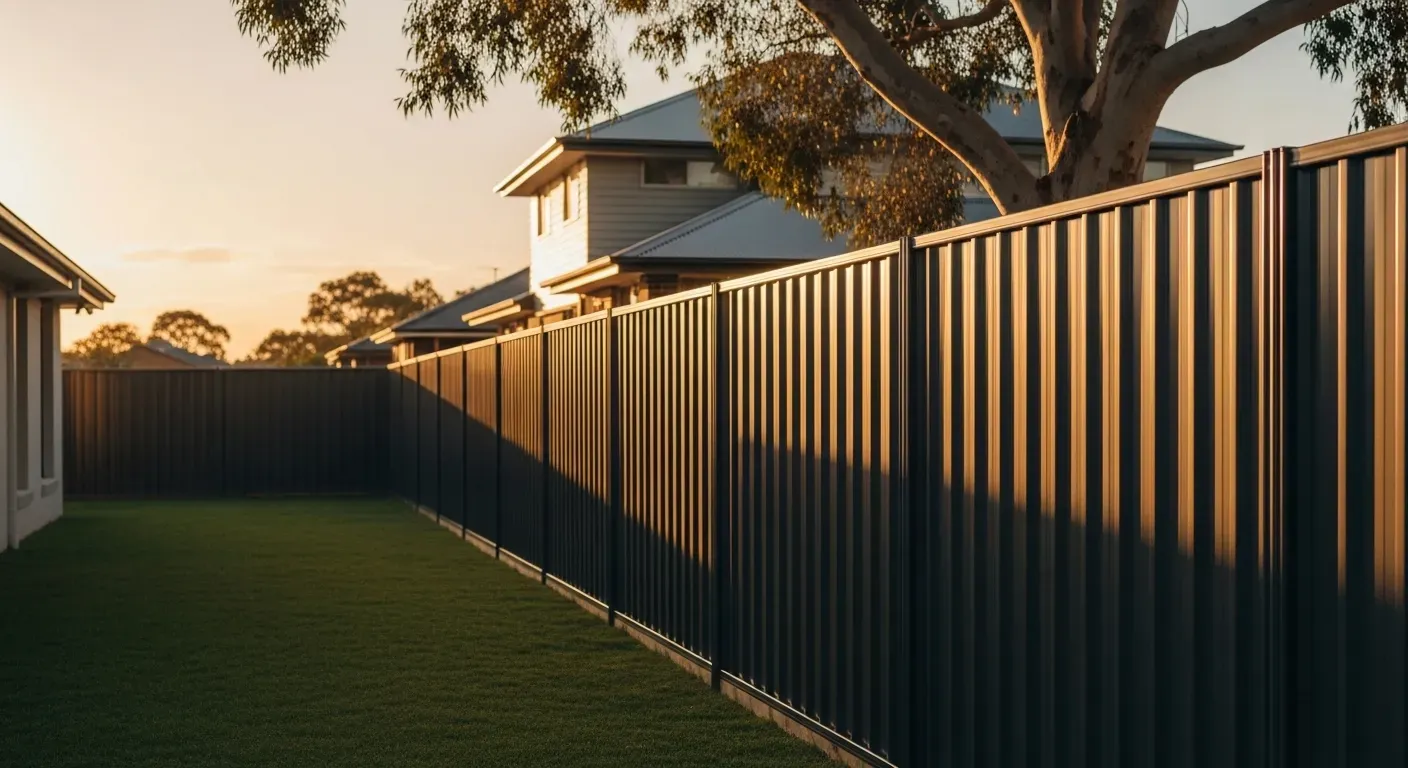
Colorbond Appearance and Aesthetic Characteristics: Uniform consistent appearance with smooth flat panels creating clean modern aesthetic, no variation between panels or over time maintaining original appearance throughout lifespan. Colour options: BlueScope standard colours include Woodland Grey Surfmist Paperbark Dune Evening Haze Monument Basalt Pale Eucalypt Deep Ocean, no price difference between standard colours, Matt finish available in selected colours adding $10-$15/m for reduced glare and contemporary look, colour consistent and fade-resistant over lifespan maintaining appearance. Style options: standard Colorbond flat panel most common and economical, Colorbond with timber-look slats hybrid appearance at premium cost $150-$200/m, lattice top option for decorative appearance, retaining wall integration available. Aesthetic considerations: suits modern contemporary and minimalist architectural styles, industrial appearance may not suit heritage or character homes, available colours complement most Australian house colours, horizontal panel lines create clean visual appearance, consistent look often preferred for boundary fencing where uniformity valued.
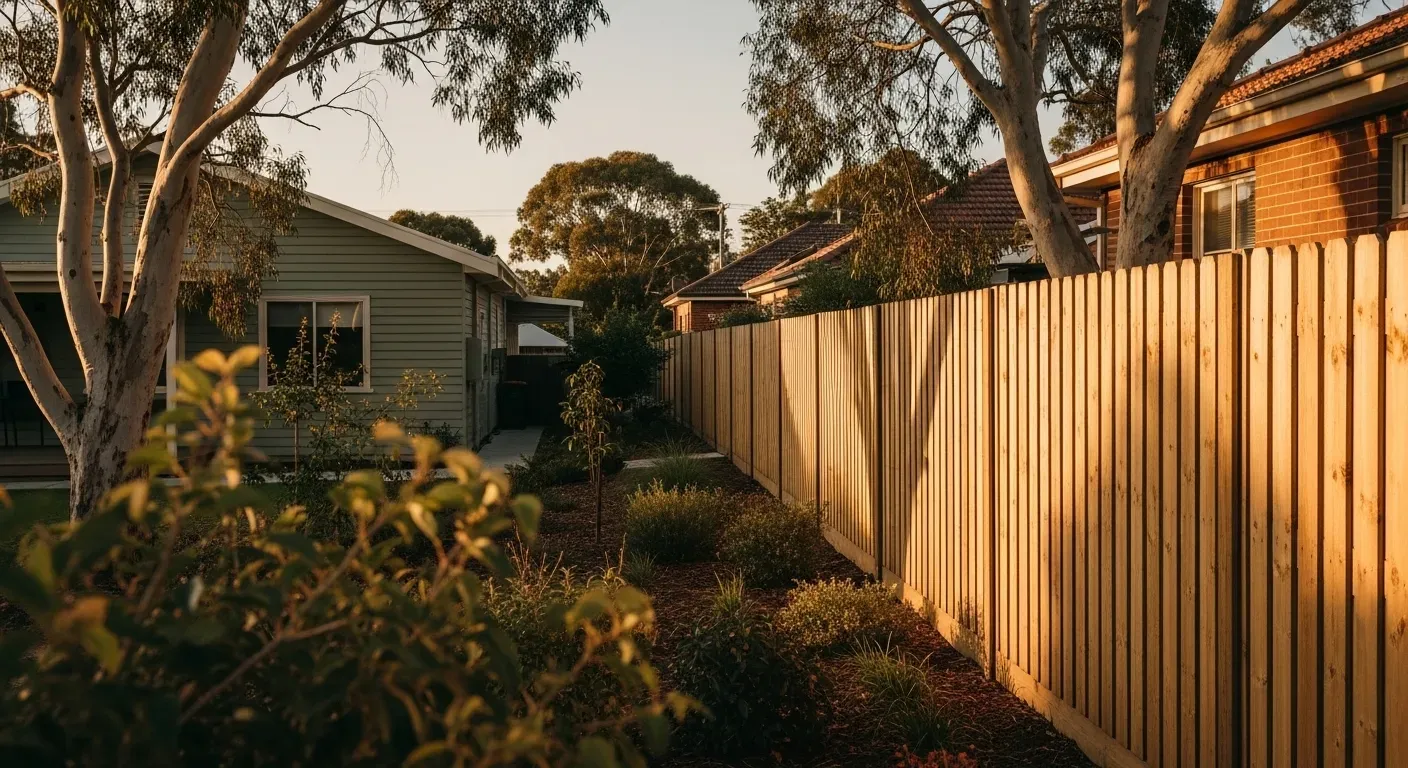
Timber Appearance and Aesthetic Characteristics: Natural warm appearance with visible grain texture and colour variation creating organic aesthetic, each piece of timber unique with individual characteristics, appearance changes over time weathering to silver-grey if untreated or maintaining colour if regularly oiled or stained. Timber appearance by type: treated pine light colour when new often stained to enhance appearance, grain visible but less pronounced than hardwoods, knots common adding rustic character, tends to grey unevenly if left untreated. Hardwood rich natural colours from golden to deep brown depending on species, prominent grain creates attractive natural patterns, weathers to even silver-grey patina if left untreated, takes oil stains and finishes well maintaining colour with regular treatment. Merbau distinctive reddish-brown colour highly valued, fine even grain with minimal knots, premium appearance for front fences and feature applications, weathers to silver-grey if not oiled regularly. Customization options: paint any colour allowing perfect colour matching or statement colours, decorative staining highlighting grain or creating specific colour effect, combination with other materials lattice stone columns, carved or shaped post caps and finials for traditional styles.
Appearance Over Time Comparison: Colorbond appearance at year 0 versus year 20 virtually identical assuming no damage, colour remains consistent and fade-resistant, no surface degradation or texture change, maintenance only affects cleanliness not appearance. Timber appearance changes significantly over time: maintained timber year 0 fresh treatment colour and sheen, year 1-2 colour fading surface dulling, year 2-3 requires retreatment to maintain appearance, cycle repeats throughout fence lifespan, unmaintained timber year 0 natural timber colour, year 1-2 significant greying and surface degradation, year 3-5 extensive weathering potential rot beginning, year 5-10 severely degraded appearance structural concerns, appearance maintenance adds significant ongoing cost and effort. Appearance preference guidance: if consistent low-maintenance appearance valued choose Colorbond, if natural organic aesthetic valued and willing to maintain choose timber, if want flexibility to change appearance over time timber allows repainting in different colours, if want facade-quality front fence appearance consider premium Colorbond Matt or quality hardwood timber.