Critical Warning Signs: When Is a Tree Dangerous Australia
Dangerous trees show specific warning signs that indicate structural instability and potential failure risk. Critical indicators include trunk lean exceeding 15 degrees, large cracks or cavities, dead branches over occupied areas, exposed or damaged root systems, and fungal growth indicating internal decay. Some situations demand immediate emergency response (trees on power lines, actively falling), while others require urgent arborist assessment within 24-48 hours. Regular tree inspections can prevent catastrophic failures that cause property damage, injuries, or death.
Typical cost
Dangerous trees show specific warning signs that indicate structural instability and potential failure risk. Critical indicators include trunk lean exceeding 15 degrees, large cracks or cavities, dead branches over occupied areas, exposed or damaged root systems, and fungal growth indicating internal decay. Some situations demand immediate emergency response (trees on power lines, actively falling), while others require urgent arborist assessment within 24-48 hours. Regular tree inspections can prevent catastrophic failures that cause property damage, injuries, or death.
Best next step
Use the guide below to compare options, avoid common traps and request itemised quotes from licensed local suppliers.
Quote check
Make sure each quote includes materials, labour, access requirements, exclusions, warranty and expected timeline.
Local factors
Final pricing can shift with site access, location, compliance requirements and the condition of existing infrastructure.
12 Visual Warning Signs of Dangerous Trees Australia
Trunk and Bark Problems
Critical structural issues visible on the main trunk
Cracks and Splits
- • Vertical cracks longer than 30cm: Indicate structural failure
- • Horizontal cracks: Often more serious than vertical
- • Widening gaps: Active failure in progress
- • Deep seams in co-dominant stems: Weak attachment points
Urgency: High - Assess within 24-48 hours
Bark Damage and Decay
- • Large areas of missing bark: Over 25% circumference
- • Peeling or loose bark: May indicate pest damage
- • Discoloured or weeping areas: Fungal or bacterial infection
- • Hollow sounds when tapped: Internal decay present
Urgency: Medium - Assess within 1-2 weeks
Cavities and Holes
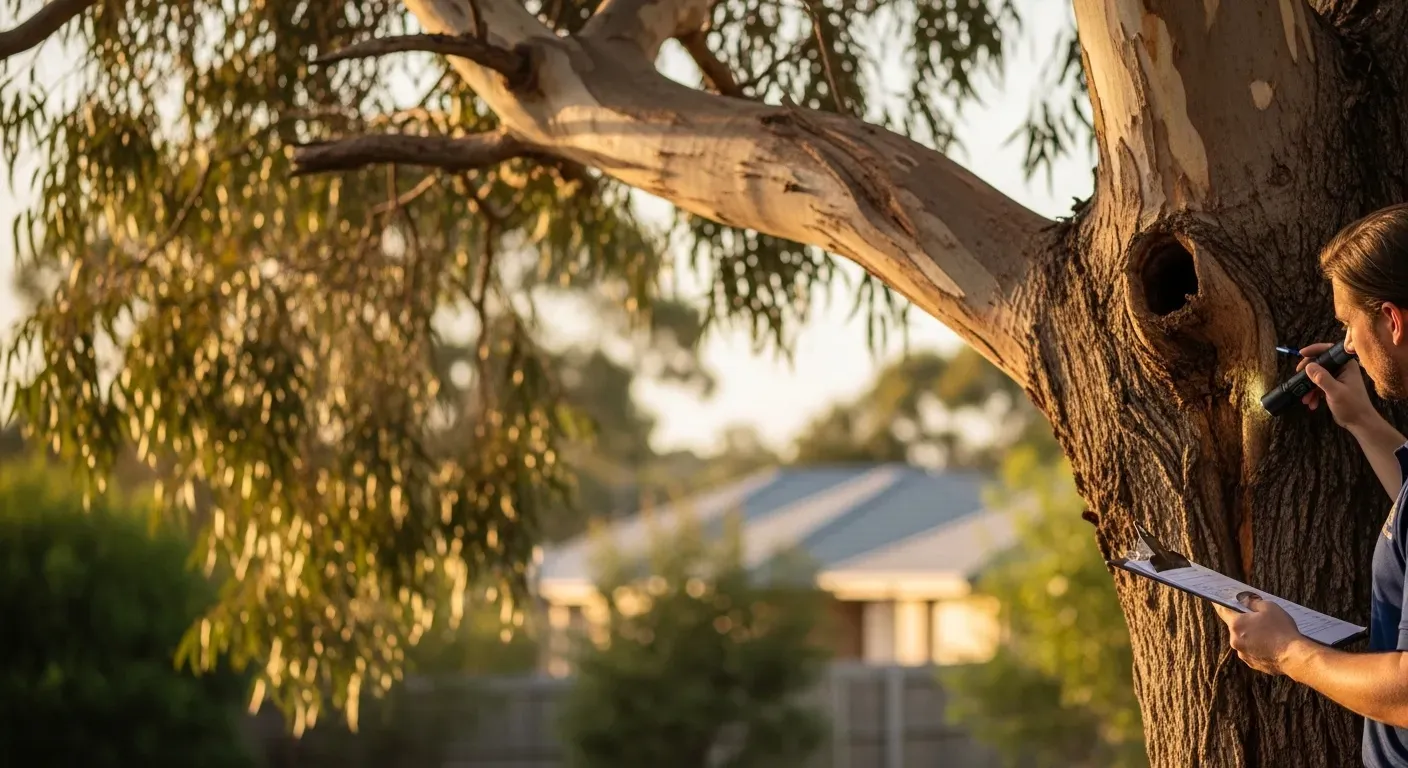
- • Cavities exceeding 30% of trunk diameter: Significant weakness
- • Multiple interconnected cavities: Compromised structure
- • Woodpecker or borer holes: Indicate pest infestation
- • Soft or punky wood inside: Advanced decay
Urgency: High - Assess within 24-48 hours
Fungal Growth
- • Bracket fungi on trunk: Indicate internal rot
- • Mushrooms at base or roots: Root rot present
- • Honey fungus (Armillaria): Aggressive root disease
- • White rot vs brown rot fungi: Both indicate structural failure
Urgency: Medium-High - Assess within 3-7 days
Branch Warning Signs
Dead, damaged, or poorly attached branches
Dead Branches
- • No leaves or buds in growing season
- • Brittle, breaks easily
- • Loose or peeling bark
- • Over pathways or structures
Urgency: High if over occupied areas
Hanging Branches
- • Partially broken but still attached
- • Called "widow makers"
- • Can fall without warning
- • Common after storms
Urgency: IMMEDIATE - Emergency removal
V-Shaped Crotches
- • Acute angle attachments
- • Included bark between stems
- • Weak union prone to splitting
- • Cracks visible at junction
Urgency: Medium - Monitor regularly
Lean and Root System Problems
Instability and foundation issues
Significant Lean
- • Sudden lean changes: Recent movement indicates instability
- • Lean exceeding 15 degrees: Elevated failure risk
- • Lean toward structures or roads: High consequence target
- • Soil cracks on tension side: Root plate movement
- • Soil heaving on compression side: Tree pushing over
Urgency: IMMEDIATE if recent change
Root Damage
- • Exposed roots from erosion: Loss of anchorage
- • Severed roots from construction: Over 25% cut = high risk
- • Root decay or mushroom growth: Root rot diseases
- • Lifting root plate: Tree preparing to fall
- • Shallow root systems: Natural instability
Urgency: High - Assess within 24-48 hours
Canopy and Overall Health
Signs of decline and stress
Canopy Dieback
- • Over 25% of canopy dead or dying
- • Starting from top down = serious
- • One-sided dieback = root damage
- • Rapid progression indicates disease
Leaf Problems
- • Premature leaf drop in spring/summer
- • Discoloured or spotted leaves
- • Sparse canopy with thinning foliage
- • Undersized leaves = stress
Sudden Changes
- • Rapid health decline (weeks/months)
- • New cracks or splits appearing
- • Increased deadwood production
- • Change in lean or posture
Emergency vs Scheduled Tree Removal: Response Timeline Australia
CALL EMERGENCY SERVICES (000)
- • Tree has fallen on structure or vehicle with potential injuries
- • Tree is touching or has fallen on power lines - extreme electrocution risk
- • Tree is actively falling or splitting with immediate danger to life
- • Tree blocking road or emergency access creating public safety hazard
- • Gas line or water main damaged by fallen tree
DO NOT APPROACH:
- • Trees touching power lines (assume live)
- • Leaning trees under tension
- • Partially fallen trees lodged in structures
URGENT ARBORIST (Within 24 Hours)
- • Sudden significant lean toward structures indicating imminent failure
- • Large hanging branches (widow makers) over occupied areas
- • Major storm damage with structural compromise but not immediately falling
- • Visible root plate lifting or soil heaving around base
- • Large trunk cracks that are widening with recent changes
IMMEDIATE ACTIONS:
- • Cordon off area beneath tree
- • Document with photos/video
- • Contact 24-hour emergency arborist
PRIORITY ASSESSMENT (Within 1 Week)
- • Dead tree over 8 metres tall with branches over structures
- • Multiple large dead branches in canopy requiring removal
- • Cavities exceeding 30% trunk diameter at critical points
- • Significant fungal fruiting bodies on trunk or roots
- • Pre-existing lean with new cracks at base or trunk
SCHEDULED ASSESSMENT (Within 1 Month)
- • Gradual canopy decline (25%+ dieback over seasons)
- • Minor lean (under 15°) not increasing requiring monitoring
- • Co-dominant stems with included bark without active splitting
- • General health decline from drought, age, or stress
- • Small cavities or minor bark damage not affecting structure
DIY Tree Safety Assessment Checklist: 20-Point Inspection Australia
Use this checklist to document concerns before calling an arborist. Answer YES/NO for each question:
Trunk Assessment
Branch Assessment
Lean and Stability
Root and Health
Assessment Results:
- 5+ YES answers: Urgent professional assessment required within 24-48 hours
- 3-4 YES answers: Schedule arborist inspection within 1-2 weeks
- 1-2 YES answers: Monitor tree and schedule assessment within 1 month
- 0 YES answers: Tree appears safe but continue regular annual inspections
Post-Storm Tree Damage Assessment: Safety Inspection Guide Australia
After severe weather events, systematically assess your trees for damage in order of priority:
FIRST: Immediate Hazards (Emergency Action)
- • Trees on power lines: Call emergency services immediately (000)
- • Hanging branches over occupied areas: Cordon off and call arborist
- • Partially uprooted trees: Extremely unstable, call professionals
- • Trees leaning on structures: May collapse further, evacuate and call
- • Split trunks still standing: Can fail suddenly, keep clear
SECOND: Major Structural Damage (24-Hour Priority)
- • Large branches broken but not fallen: Document with photos
- • Root plate lifting: Check for soil cracks and heaving
- • New significant lean: Measure angle if possible
- • Trunk splits or cracks: Mark with chalk to monitor expansion
- • Crown breakage over 30%: Tree stability compromised
THIRD: Minor Damage (1-Week Assessment)
- • Small broken branches: Clean breaks can be pruned
- • Leaf and twig loss: Usually not structural concern
- • Minor bark damage: Monitor for infection
- • Soil erosion around roots: May need backfilling
- • Torn or damaged roots: Assess percentage affected
Storm Damage Documentation Tips:
- • Take photos from multiple angles before any work
- • Include reference objects for scale (person, ruler)
- • Video walk-around showing full extent of damage
- • Note date, time, and weather conditions
- • Keep for insurance claims and council permits
- • Don't remove evidence until insurer inspects