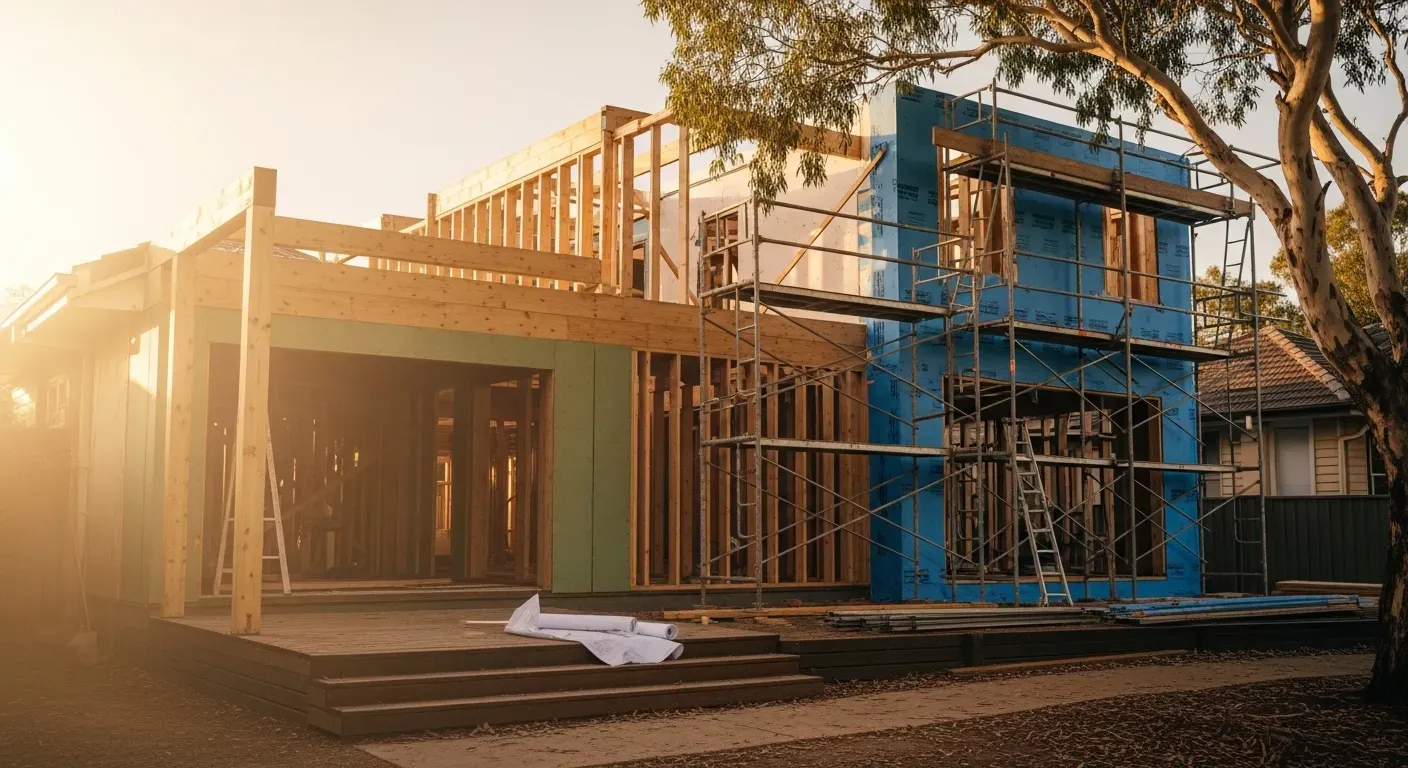
Second Storey Extension Guide 2026

Second Storey Extension Mistakes to Avoid Australia 2026 Critical Errors in Planning, Budgeting & Construction

Avoid costly mistakes when adding a second storey extension. Learn from common structural errors, budget blowouts, council issues, and poor planning decisions that cost homeowners $50,000-$150,000+.

The Wombat Team
Updated 15 April 2026
Guide
Second Storey Extension Mistakes to Avoid Australia 2026 Critical Errors in Planning, Budgeting & Construction guide image
Quick Answer 4 min read

Common Second Storey Extension Mistakes: Quick Overview Australia

Australian homeowners lose $50,000-$150,000+ on second storey extensions through preventable mistakes. The most catastrophic: skipping structural assessment before committing to design ($30,000-$80,000 mid-construction surprises), inadequate contingency budgets causing project failures, hiring builders without second storey experience ($50,000-$150,000 in rectification), and starting before Development Approval (illegal, can force $100,000-$200,000 demolition). This guide helps you avoid these costly errors and complete your extension successfully.

Typical cost

Australian homeowners lose $50,000-$150,000+ on second storey extensions through preventable mistakes. The most catastrophic: skipping structural assessment before committing to design ($30,000-$80,000 mid-construction surprises), inadequate contingency budgets causing project failures, hiring builders without second storey experience ($50,000-$150,000 in rectification), and starting before Development Approval (illegal, can force $100,000-$200,000 demolition). This guide helps you avoid these costly errors and complete your extension successfully.

Best next step

Use the guide below to compare options, avoid common traps and request itemised quotes from licensed local suppliers.

Quote check

Make sure each quote includes materials, labour, access requirements, exclusions, warranty and expected timeline.

Local factors

Final pricing can shift with site access, location, compliance requirements and the condition of existing infrastructure.

-2 text-gray-400">→ FAQs

Critical Planning & Assessment Mistakes: Second Storey Extensions Australia

Mistake #1: Skipping Comprehensive Structural Assessment

Cost of mistake: $30,000-$80,000

Many homeowners commission architectural plans ($8,000-$25,000) before proper structural assessment, only to discover their foundation cannot support a second storey. Older homes (pre-1980) weren't designed for additional load and often require extensive strengthening work discovered too late.

Common consequences:

  • Foundation strengthening required mid-construction: $15,000-$50,000
  • Additional structural steel not in original budget: $10,000-$25,000
  • Project deemed unviable after spending on plans: $25,000+ wasted
  • Timeline delays while addressing structural issues: 2-4 months

✓ How to avoid:

Invest $3,000-$8,000 in comprehensive structural engineering assessment BEFORE engaging an architect. Assessment should include: foundation load capacity analysis, soil type evaluation, existing structure inspection, and detailed report on required structural work. This upfront investment saves $30,000-$80,000 in mid-construction surprises or identifies deal-breakers before significant investment.

Mistake #2: Using Cookie-Cutter Plans to Save Money

Cost of mistake: $50,000-$150,000

Attempting to reuse plans from another property or buying generic online plans saves $8,000-$15,000 upfront but ignores critical site-specific requirements. Every property has unique foundation capacity, soil conditions, and structural characteristics. Structural engineers won't certify generic plans, and councils won't approve them.

Common consequences:

  • Council rejection requiring complete redesign: $15,000-$30,000 + 3-6 month delay
  • Structural failures requiring expensive rectification: $50,000-$150,000
  • Poor spatial planning reducing functionality and resale value: $30,000-$80,000
  • Inability to obtain insurance or sell property until rectified

✓ How to avoid:

Engage experienced architect ($8,000-$25,000) to design custom plans for your specific property. Architects coordinate with structural engineers, ensure council compliance, maximize site potential, and create buildable designs minimizing construction variations. Custom plans are not optional - they're essential for structural integrity, legal compliance, and protecting your $250,000-$600,000 investment.

Mistake #3: Underestimating Council Approval Complexity

Cost of mistake: $15,000-$40,000 + 3-6 month delays

Many homeowners assume Development Approval is a rubber-stamp process, failing to research height restrictions, setback requirements, heritage overlays, or tree preservation orders. Neighbor objections, council requests for modifications, or outright rejections force expensive redesigns and timeline blowouts.

Common consequences:

  • DA rejection requiring major redesign: $15,000-$30,000 in wasted plans + new architect fees
  • Neighbor objections causing 2-4 month delays and design compromises
  • Heritage requirements forcing expensive material specifications: +$20,000-$60,000
  • Tree preservation orders requiring design modifications or project abandonment

✓ How to avoid:

Research council requirements thoroughly before finalizing design. Check: height restrictions (typically 8.5-9m max), setback requirements (usually 900mm minimum), heritage overlays, tree preservation orders, and recent approvals in your area. Engage architect familiar with your local council. Consider pre-DA meeting with council planner ($500-$1,000) to identify potential issues. Submit DA only when confident design complies - resubmissions cost time and money.

Budget & Cost Mistakes: Second Storey Extension Budgeting Australia

Mistake #4: Inadequate Contingency Budget

Cost of mistake: Project stops or quality compromises

Budgeting only 10% contingency (appropriate for ground extensions) leaves second storey projects vulnerable. Complex structural work encounters more surprises: hidden asbestos, inadequate existing framing, upgraded service requirements, and unforeseen site conditions. Running out of money mid-construction forces quality compromises or project abandonment.

Common unexpected costs:

  • Asbestos removal from ceiling and eaves: $5,000-$15,000
  • Additional structural steel beyond engineering estimate: $10,000-$25,000
  • Electrical panel upgrade to handle increased load: $3,000-$8,000
  • Waterproofing corrections for existing roof penetrations: $5,000-$20,000
  • Timeline extensions due to weather or delays: $3,000-$8,000 per week

✓ How to avoid:

Budget 20-25% contingency for second storey extensions. For $250,000 project, set aside $50,000-$62,500 you won't touch except for genuine surprises. Don't allocate contingency to wish-list items or upgrades - that defeats its purpose. Keep contingency in accessible savings, not locked in term deposits. If you finish under budget, great - better than stopping mid-construction or compromising quality because funds ran out.

Mistake #5: Choosing Cheapest Quote

Cost of mistake: $80,000-$150,000 in rectification

Quotes more than 20% below others indicate cut corners, inadequate scope, or financial instability. Second storey work is complex and expensive - legitimate builders cannot substantially undercut competitors on properly scoped work. Cheap quotes often exclude essential items (foundation work, engineering, waterproofing) or use unlicensed subcontractors.

Red flags in cheap quotes:

  • Builder unlicensed or insufficient insurance coverage (major liability risk)
  • Structural engineering "allowances" rather than actual engineer quotes
  • Vague scope enabling extensive variations adding $50,000-$100,000 later
  • Builder planning to request variations throughout construction
  • Financially struggling builder (risk of project abandonment mid-construction)

✓ How to avoid:

Obtain 3-5 detailed quotes from licensed, experienced builders. Choose mid-range quotes (not cheapest, not most expensive) from builders with proven second storey experience. Verify: full builder's license, $20 million public liability insurance, structural warranty, workmanship warranty, detailed scope matching your plans. Check 3-5 references specifically for second storey projects. Saving $30,000 upfront with cheap quote typically costs $80,000-$150,000 in rectification, legal fees, and stress.

Mistake #6: Forgetting "Soft Costs" in Budget

Cost of mistake: $40,000-$80,000+ in unbudgeted expenses

Many homeowners budget only construction costs ($2,500-$4,500/sqm) while forgetting professional fees, council costs, temporary accommodation, and holding costs. "Soft costs" typically add 20-30% to construction budget but are often completely overlooked, causing budget blowouts and financial stress.

Commonly forgotten costs:

  • Structural engineering assessment and certification: $3,000-$8,000
  • Architectural design and plans: $8,000-$25,000
  • Development Application fees and consultants: $2,000-$5,000
  • Temporary accommodation during construction: $15,000-$30,000 (6 months)
  • Mortgage holding costs during construction: $8,000-$15,000 (6-9 months interest)
  • Furniture and fittings for new rooms: $10,000-$30,000
  • Landscaping reinstatement after construction: $5,000-$15,000

✓ How to avoid:

Budget total project cost, not just construction: Construction ($250,000 for 100sqm), Professional fees ($13,000-$38,000), Council fees ($2,000-$5,000), Contingency ($50,000-$62,500), Temporary accommodation ($15,000-$30,000 if needed), Holding costs ($8,000-$15,000), Furniture ($10,000-$30,000). Total realistic budget: $348,000-$430,500. Missing these costs causes mid-project financial crisis.

Construction & Builder Selection Mistakes: Second Storey Australia

Mistake #7: Hiring Builder Without Second Storey Experience

Cost of mistake: $50,000-$150,000 + massive delays

Second storey construction requires specialized structural knowledge that ground floor extension builders don't necessarily possess. Inexperienced builders underestimate complexity, make critical structural errors, mismanage load transfer, provide inadequate temporary protection, and cause timeline blowouts. "General builder" experience is insufficient for this specialized work.

Common errors from inexperienced builders:

  • Inadequate load transfer systems requiring expensive steel additions: $20,000-$50,000
  • Poor temporary roof protection causing water damage: $10,000-$40,000 repairs
  • Incorrect structural steel specifications requiring replacement: $15,000-$35,000
  • Massive timeline blowouts (6-month project becomes 12-18 months)
  • Structural failures requiring rectification or demolition: $50,000-$150,000

✓ How to avoid:

Verify builder has completed minimum 3-5 second storey projects in your area within past 3 years. Request: photos of completed projects, client references you can contact (not just testimonials), structural engineering reports from those projects, evidence of proper insurance and licensing. Visit completed projects if possible. Ask specific questions about structural challenges encountered and how they were resolved. Second storey experience is non-negotiable - don't let any builder "learn on your project."

Mistake #8: Making Design Changes During Construction

Cost of mistake: $20,000-$60,000 + 2-4 month delays

Rushing design phase and deciding "we'll figure it out during construction" causes expensive variations. Every change requires: builder variation fee, wasted materials already ordered, timeline delays, and potentially structural re-engineering. Multiple changes quickly add $20,000-$60,000 and months to timeline. What seems like minor tweaks during construction is actually major expensive disruption.

True cost of variations:

  • Builder variation fees: $1,000-$5,000 per change (even "small" changes)
  • Wasted materials already ordered: $2,000-$10,000 (still must be paid for)
  • Timeline delays: 1-3 weeks per major change at $3,000-$8,000 weekly holding costs
  • Structural re-engineering if changes affect load paths: $5,000-$15,000
  • Multiple changes commonly add $20,000-$60,000 total and 2-4 months

✓ How to avoid:

Finalize ALL design decisions before construction starts. Take adequate time in design phase (2-3 months minimum) to make considered choices on: room layouts, window/door locations, fixture positions, materials, finishes, colors, hardware. Visit display homes, showrooms, and completed projects. Create detailed selection schedule. Sign off on final plans knowing they're exactly what you want. Understand variations cost 3-5x more than getting it right initially. Once construction starts, resist urge to change anything except genuine errors.

Mistake #9: Underestimating Construction Disruption

Cost of mistake: Family stress + rushed decisions costing $5,000-$15,000

Many families assume they can "tough it out" during 4-6 months of construction without realistic planning. Noise from 7am-5pm weekdays, dust throughout home despite barriers, limited outdoor access due to scaffolding, and 2-4 weeks with only temporary roof protection creates significant stress. Families with young children, health issues, or work-from-home situations often find staying impossible after 2-3 months, forcing rushed mid-construction relocation costing $5,000-$15,000 in emergency arrangements.

Realistic disruption expectations:

  • Constant noise 7am-5pm weekdays: cutting, drilling, hammering (80-100 decibels)
  • Dust throughout house despite plastic barriers (daily cleaning required)
  • Limited outdoor access due to scaffolding, materials, and safety exclusion zones
  • 2-4 weeks with temporary roof protection only (tarpaulins, potential leaks)
  • Tradespeople using bathroom facilities, parking requirements, site security

✓ How to avoid:

Be realistic about tolerance for disruption. If you have young children, health issues, work from home, or value peace and quiet - budget $15,000-$30,000 for 6-month temporary accommodation. This isn't luxury; it's preserving mental health and avoiding stress-driven decisions. If staying: create realistic plan with designated clean zones, temporary kitchen setup, dust management strategy, and backup accommodation option if it becomes unbearable. Don't underestimate impact - 4-6 months is long time living in construction zone.

Quote match

Add a Second Storey to Your Home: Double Your Living Space

Compare 3 free quotes from licensed extension builders in your area. No obligation, fast response within 24-48 hours.

100% Free
Licensed Pros
No Obligation
FAQ

Frequently Asked Questions

Clear answers to the questions homeowners usually ask before comparing quotes.

1

What is the biggest mistake when adding a second storey?

The biggest mistake is skipping comprehensive structural assessment before committing to the project. Foundation issues discovered mid-construction cost $30,000-$80,000 to rectify and can delay projects by 2-4 months. Always invest $3,000-$8,000 in thorough structural engineering assessment first, especially for homes built pre-1980. Some homes simply cannot economically support a second storey - discovering this after spending $25,000 on architectural plans is devastating.
2

How much contingency should I budget for a second storey extension?

Budget 20-25% contingency for second storey extensions (higher than ground extensions' 10-15%). For a $250,000 project, set aside $50,000-$62,500 for unexpected costs. Common surprises include: asbestos removal ($5,000-$15,000), additional structural steel ($10,000-$25,000), foundation strengthening ($15,000-$50,000), upgraded electrical panel ($3,000-$8,000), and unforeseen waterproofing work ($5,000-$20,000). Projects without adequate contingency face mid-construction stops or quality compromises.
3

Should I hire a builder who hasn't done second storey work before?

No - second storey experience is essential. Ground floor extension skills don't translate to second storey structural requirements. Inexperienced builders make critical errors: inadequate load transfer ($20,000-$50,000 to fix), poor temporary roof protection causing water damage ($10,000-$40,000 repairs), incorrect steel specifications requiring replacement ($15,000-$35,000), and timeline blowouts (6-month project becomes 12 months). Verify builder has completed minimum 3-5 second storey projects with photos and references you can contact.
4

Can I start construction before Development Approval?

Absolutely not - this is illegal and catastrophic. Building without DA leads to: council stop-work orders, daily fines ($5,000-$10,000), forced demolition of completed work, inability to sell property without compliance, insurance void (no coverage for any issues), and potential criminal charges. Even minor work requires approval. Some homeowners have lost $100,000-$200,000 in forced demolition plus legal fees. Always wait for DA approval - the 6-12 week wait saves you from potential financial ruin.
5

Is it okay to use plans from another house to save money?

No - every site requires custom structural assessment. Foundations, soil types, and existing structures vary dramatically. Cookie-cutter plans ignore your specific load-bearing requirements, leading to structural failures costing $50,000-$150,000 to rectify. Engineers won't certify plans not designed for your specific property. Council won't approve generic plans. Architects charge $8,000-$25,000 for custom plans - this investment is essential and cannot be safely avoided. Trying to save $15,000 on plans often costs $50,000+ in corrections.
6

Can I save money by doing demolition myself?

Unlikely - and potentially dangerous. Second storey demolition requires understanding load-bearing walls and proper temporary support. DIY mistakes include: removing load-bearing walls causing collapse ($50,000-$200,000 damage), inadequate dust containment spreading asbestos ($10,000-$30,000 professional cleanup), damage to structures needing repair ($5,000-$20,000), and injuries requiring medical care plus project delays. Professional demolition costs $5,000-$15,000 and includes asbestos testing, proper disposal, and liability insurance. Save money elsewhere - not on structural work.
7

Should I pick the cheapest quote to save money?

Cheapest quote usually means cut corners or hidden costs. Quotes more than 20% below others are red flags: builder may be unlicensed (no insurance, no warranty), scope doesn't include essential items (foundation work, engineering, waterproofing), builder planning to request variations adding $50,000-$100,000, or builder financially struggling (risk of abandoning job). Choose middle-range quotes from licensed, experienced builders with solid references. Saving $30,000 upfront often costs $80,000-$150,000 in rectification work and legal fees.
8

Can I skip the engineering assessment to save $5,000?

This is the worst cost-cutting mistake. Structural engineering ($3,000-$8,000) is legally required and protects you from catastrophic failure. Without engineering: council rejects your DA (wasted months and $10,000-$25,000 in architectural fees), builder cannot proceed legally, insurance won't cover structural issues, and home could collapse during or after construction causing $200,000-$500,000+ damage, injuries, or death. Engineering assessment also identifies deal-breakers upfront, potentially saving you from investing $50,000-$100,000 in a project that isn't viable.
9

Is it worth paying for good architects or can I use cheap draftsperson?

For second storey extensions, experienced architects ($8,000-$25,000) are worth the investment over cheap draftspeople ($3,000-$8,000). Architects provide: structural coordination with engineers, council-compliant designs minimizing rejections, spatial planning maximizing functionality, problem-solving for site constraints, and quality documentation reducing builder variations. Cheap draftspeople often produce drawings requiring $10,000-$20,000 in revisions, miss council requirements causing 2-4 month delays, and create buildability issues adding $15,000-$40,000 in construction costs. Good design pays for itself in smooth approvals and efficient construction.
10

Can we change the design during construction to save time?

Design changes during construction are extremely expensive. Each variation costs: builder variation fees ($1,000-$5,000 per change), wasted materials already ordered ($2,000-$10,000), timeline delays (1-3 weeks per major change at $3,000-$8,000 weekly holding costs), and potential structural re-engineering ($5,000-$15,000). Multiple changes commonly add $20,000-$60,000 to project costs and 2-4 months to timeline. Finalize all decisions before construction starts. The design phase exists to avoid expensive changes later. Rushed upfront planning costs 3-5x more when corrected during construction.
Free quote match

Get Free Second Storey Extension Quotes in 24 Hours

Compare prices from licensed extension builders. No obligation, 100% free.

Verified second storey extension specialists

Matched by project type, service area and availability.

Compare scope, inclusions and timing

Understand what each quote includes before choosing.

Free, fast and no obligation

Most quote requests receive responses within 24-48 hours.

Second Storey Extension quote match

Get your free quotes

Secure
SSL Secure
No obligation
Privacy Protected
Finance available

Need help financing your second storey extension?

Explore finance options for projects from $250,000-$500,000+ with flexible payment pathways through our trusted partner Fundd.

Learn About Finance Options

No obligation. Check options before you commit to a project.

Trusted finance partner

Fundd Finance

Fundd

Australian home improvement finance support.

Fast Approval
Flexible Terms
Competitive Rates

Avoid costly second storey mistakes

Get Quotes

Ethan L. from Sunbury, VIC

requested Pool Fencing

14 minutes ago